Category: Uncategorized

Welcome Jim Purcell to the Atlas Team!

Atlas Real Estate Advisors is proud to announce that Jim Purcell has joined the team.

Jim Purcell, an industry veteran with over 25 years of experience in banking and finance and more than a decade in real estate, has joined the Atlas Real Estate Advisors team.

A native of Athens, Georgia, and a proud University of Georgia graduate, Jim has also completed Executive Education programs at the University of Michigan and the University of Colorado. With an extensive network spanning the country, Jim brings expertise in brokerage, construction, development, site selection, and residential investments. His role at Atlas will allow him to leverage his wealth of experience to deliver exceptional results for his clients.

Beyond his professional achievements, Jim is deeply committed to community service. He serves on the boards of the UGA Football FCA, Downtown Ministries, and Project HOOD in Chicago. His dedication to giving back aligns seamlessly with Atlas’s values of fostering growth and making a positive impact locally and nationally.

“We are thrilled to welcome Jim to the Atlas team,” said Matt Thomas, Managing Partner. “His creativity, reliability, and steadfast approach to business align perfectly with our mission of delivering exceptional service and results.”

2024 Trends in Commercial Real Estate in GA

The commercial real estate (CRE) market is undergoing significant changes in 2024, driven by various economic, technological, and societal factors. Here are some of the key trends shaping the landscape and how Atlas can help.

High Interest Rates

Interest rates have remained elevated, creating a challenging environment for CRE financing. This “higher-for-longer” rate scenario is pushing investors and developers to rethink their strategies. Refinancing existing debt has become more expensive, leading to a cautious approach to new investments and development. Rather than shy away from a difficult market, we believe that is the best time to get creative and consider alternative ways to create value.

Vacancy Rates in Office Spaces

Vacancy rates for office spaces remain high in most markets, and Georgia is no exception. With hybrid and remote work models becoming the new normal, the demand for traditional office space has been significantly reduced. By crafting flexible lease terms and identifying amenities that attract tenants, we have been able to bring new tenants into traditional spaces for many of our clients this year.

Strength in Industrial 

Despite challenges in office real estate, the industrial sector across the country remains robust, benefiting from the ongoing e-commerce boom. Here in Georgia, major metropolitan areas are benefiting from increased investment in warehousing and distribution centers, which are essential to meet the growing consumer demand for quick and efficient delivery services. It is evident that companies are looking to optimize supply chain logistics, making Georgia a prime location due to its strategic position and transportation infrastructure.

Focus on Sustainability 

Sustainability has become a central focus in CRE, with both investors and developers making it a priority. Both have started prioritizing green and sustainable practices to meet the increasing demand for environmentally friendly properties. This includes the incorporation of energy-efficient systems, sustainable materials, and designs that reduce the overall carbon footprint of buildings. As a LEED AP, Kyle Nelson of Atlas has extensive knowledge of green building concepts and can help incorporate sustainable practices into your current investment properties. 

Adaptive Reuse and Mixed-Use Developments

Following the sustainability trend, the concept of adaptive reuse—converting old buildings into new, functional spaces—and mixed-use developments–those that combine residential, commercial, and recreational spaces—continue to gain traction. Increasingly popular in Georgia, these approaches are seen as ways to revitalize urban areas, making them more vibrant and economically resilient by creating live-work-play environments.

Increased Investment in Secondary Markets

While major cities like Atlanta remain key hubs, there is growing interest in secondary markets across Georgia. Areas such as Athens, Augusta, Macon, and Columbus are attracting attention from investors due to their lower costs and potential for high returns. These markets offer opportunities for diversification and are seen as promising areas for future growth.

Retail Resilience and Adaptation

The retail sector is showing resilience, with grocery stores and essential services remaining strong performers. Kroger has made significant investments in the region, with a $1.7 million renovation of its store off Alps Road and a $36 million project to replace the store on Barnett Shoals Road. These investments not only provide local employment opportunities, but they also create investment opportunities as well.

Understanding the Corporate Transparency Act (CTA)

The Corporate Transparency Act (CTA) was passed in 2021 but goes into effect in 2024. It signifies a pivotal shift in the regulatory landscape, bringing about heightened transparency in corporate structures and operations within the United States. For commercial real estate investors, understanding the purpose and significance of the CTA is paramount, as it may directly impact business operations.

Combating Illegal Activities

The purpose of the CTA is to identify those who are behind the veil of US businesses and real estate ownership in an effort to tackle money laundering, potential terrorist activity, and other illicit activities.

Strengthening Accountability & Integrity

The government hasn’t historically had a good way to track the individuals behind large corporations and company names. CTA bolsters corporate governance by promoting accountability and integrity within business structures by requiring that all businesses disclose all “beneficial owners.”. There are exceptions for some large companies, SE-registered advisors, pooled funds, etc., but most corporations, LLCs and other similar entities that are established solely for the ownership of real estate will be required to meet these new requirements.

Enhanced Compliance

Compliance with CTA requirements is essential for businesses, including entities that exist for the sole purpose of owing real estate, to avoid penalties. Understanding reporting deadlines and accurately submitting beneficial ownership information to FinCen.gov is crucial.

The reporting deadlines of reporting companies vary depending on the business’s formation date, so it is important to familiarize yourself with the nuances set forth to avoid the potential penalties established by the U.S. Treasury.  LLC’s that are not in compliance with the CTA may face a fine of $500 per day per LLC or a 2-year prison sentence.

Key Dates for Investors to Remember

The commencement of BOI reporting by FinCEN begins on January 1, 2024, but reporting deadlines differ based on company registration dates:

  • Foreign and domestic entities registered in the U.S. in existence PRIOR to January 1, 2024,  have until January 1, 2025, to file initial BOI reports.
  • Foreign and domestic entities registered in the U.S. created AFTER December 31, 2023, must register within 90 days following their formation date.
  • Non-exempt foreign and domestic entities registered in the U.S. formed after December 31, 2024, are subject to a reporting deadline of 30 days after their date of organization.

Conclusion

The Corporate Transparency Act will change the way commercial real estate investors do business. Designed to identify bad actors in the space, the law impacts everyone who owns a company. Properly registering your ownership entities will be vital. Real estate professionals, including brokers, attorneys, and accountants, should become familiar with the implications of CTA and be able to provide additional information. Stay informed, meet reporting deadlines, and embrace the CTA’s principles to navigate the evolving regulatory environment effectively.


1031 Tax Deferred Exchange Oddities

1031 exchanges offer more than just tax deferral; they can be integral to strategic planning, whether you’re navigating a failed exchange, considering a reverse exchange, or planning for the future. Understanding these tools and how they fit into your broader investment strategy is crucial. 1031 exchanges allow real estate investors to defer capital gains taxes by reinvesting the proceeds from the sale of a property into a “like-kind” property. This strategy can be a powerful tool for building wealth and optimizing your investment portfolio.

What About a Failed Exchange?

Even if a 1031 exchange doesn’t go as planned, there can still be tax advantages. For example, if a sale occurs late in the year and the funds are held by a qualified intermediary past December 31 without a replacement property being acquired, the tax liability may be deferred until the year the funds are actually disbursed. This allows flexibility in managing taxable events and cash flow.

Exploring Reverse 1031 Exchanges

A Reverse 1031 exchange allows investors to purchase a new property before selling the old one. In this structure, the investor buys the replacement property first and then has 180 days to sell the relinquished property. This approach can be beneficial when a desirable property becomes available before the current property is sold. As always, it’s essential to work with a qualified intermediary and ensure all IRS guidelines are followed to maintain the tax-deferral benefits.

Leveraging 1031 Exchanges for Estate Planning

One of the often-overlooked advantages of 1031 exchanges is their role in estate planning. When an investor passes away, the heirs inherit the property at its stepped-up basis, which is the fair market value at the date of death. This means that the deferred capital gains taxes are effectively eliminated, as the heirs are not responsible for the accumulated gains. This strategy, sometimes referred to as “swap ’til you drop,” can be a valuable tool for passing on wealth to the next generation.

Final Thoughts

If you’re looking to explore how 1031 exchanges can work for you, Atlas Real Estate Advisors is here to assist. Our team can guide you through the complexities of these transactions and help you make informed decisions that align with your financial goals.

*** Always speak to a certified tax professional before initiating any transaction that may have tax-related implications. 

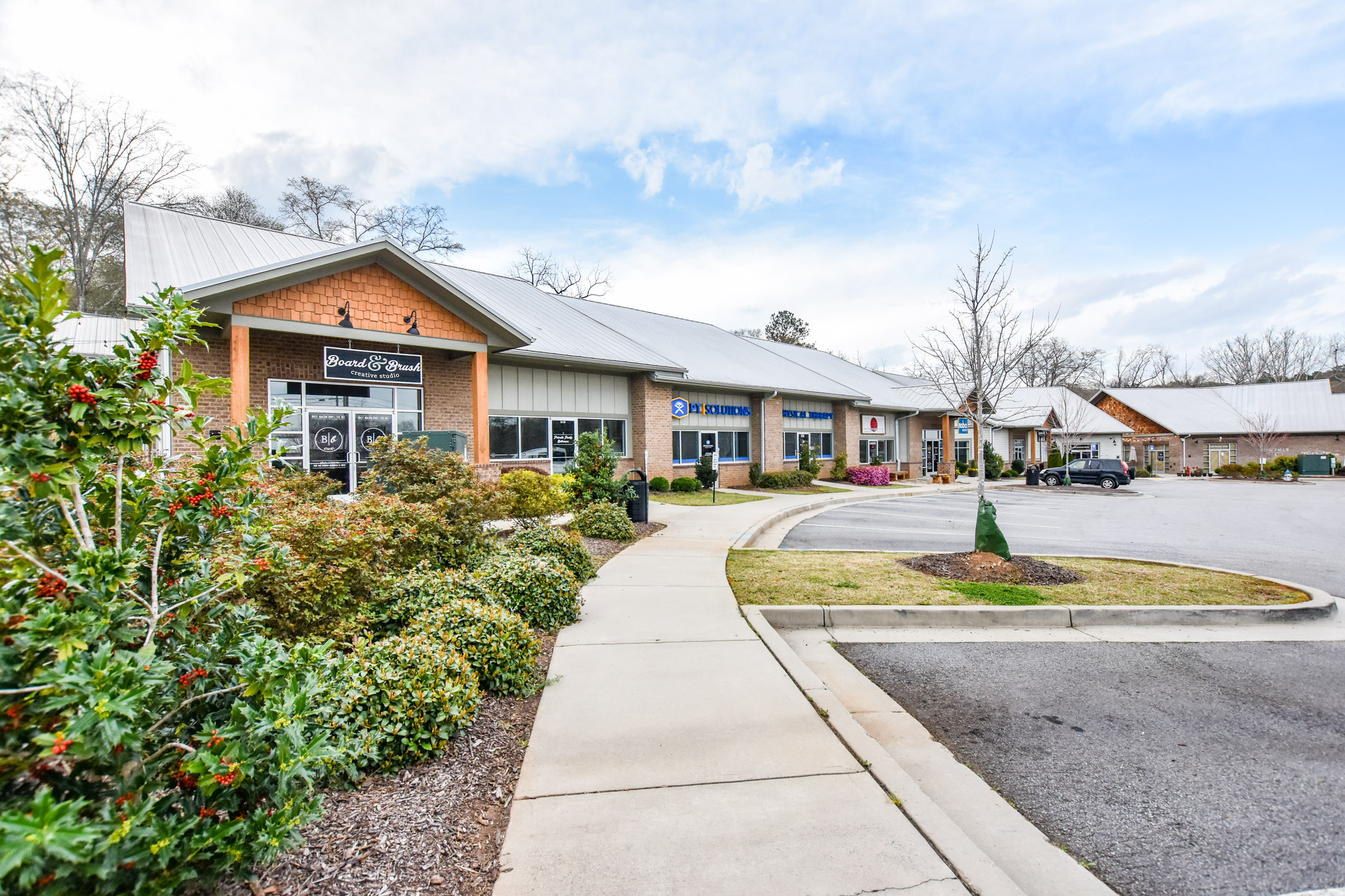
Off Market Sale – Falls of Oconee

Perhaps the most noticeable difference in commercial real estate compared to residential, is that many transactions are never really ‘on the market’- or placed in the MLS or similar online site.  

Many of the deals we put together are a result of staying in touch with our contacts and colleagues, paying attention to market conditions, and knowing how to put the pieces together when the time comes. The recent sale of The Falls of Oconee is a great example.

Our buyer client had recently sold a major investment property and was looking for something to replace it.  The ideal property was a well-established and fully-leased retail center that Atlas was involved with developing and leasing for another owner several years before.  Because of our contacts and experience in the market, we knew that the owners would sell when the time was right, so we made some calls and set up meetings with both parties to gauge the viability of the idea.  Both Buyer and Seller were interested, and the rest as they say, is history. 

The Falls of Oconee sold for $5,800,000 in April 2022 without ever spending a day ‘on the market’.  

If you are interested in learning about off-market opportunities in commercial real estate, call or email us today.

Atlas Brokers Largest Sale in Clarke County

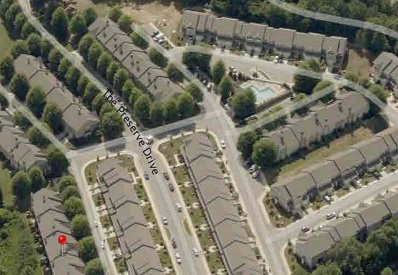
On September 8th, 2021, Matt Thomas, President of Atlas Real Estate Advisors, brokered the sale of 106 units at The Preserve Condominiums to TBR Preserve Owner LLC of Atlanta for a total sales price of $22,700,000.


The Preserve was initially developed in 2006 as a for-sale product targeting owner-occupants; but the housing collapse shifted the course of the project. Thomas represented an investor who purchased the asset in 2010 with the intent of repositioning the property as an upscale rental community. Over the next 10+ years, he proved to be indispensable to the property and ownership, assisting with every step of repositioning and stabilizing the asset.
“Matt found the opportunity for us, introduced us to the best local contacts to assist with complex legal and title issues, leased and managed the asset, served on the HOA board for us, and ultimately found a buyer for us. The Atlas team has truly represented my best interest throughout the entire cycle,” said one of the owners.
The $22,700,000 total sales price represents the largest transaction year-to-date in Clarke County for 2021 according to the Athens-Clarke County Board of Tax Assessors website.

Real Estate Advisor vs Broker: What’s the Difference?

We are frequently asked what makes Atlas Real Estate Advisors different from  a “normal” real estate brokerage. The short answer is an advisor can offer services that often fall outside the scope of buyer/seller and tenant/landlord representation.

The long answer is that good advice is hard to come by for investors with complex real estate questions.  When you need professional assistance selecting a site for your new business, preparing a development/project proforma, negotiating financing terms with a lender, restructuring a portfolio to maximize return, or with anything that falls outside of the scope of a single transaction, where do you turn?  We can help.

What services does Atlas offer that other companies do not?

  • Evaluating or completing a highest and best use analysis for a property
  • Assisting with capital allocation strategies for portfolio owners
  • Leading rezoning efforts to enhance a property’s development potential and marketability
  • Conducting feasibility and renovation projects for for income-producing properties
  • Guiding in developing, building or renovating residential and commercial properties
  • Improving management operations and customer satisfaction for your real estate team
  • Assisting in site improvements including surveys, engineering, soil tests, etc.
  • Choosing appraisers, attorneys, contractors to assist you with related needs

Isn’t every real estate broker an ‘advisor’?  

The truth is anyone can call themselves an advisor, but if they are working for a national franchise or publicly traded brokerage, the likelihood that they can offer consulting and advisory services outside of a transaction is slim. Most agents are compensated through commission payments when a property sells or leases. If there is no sale or lease transaction, the agent doesn’t get paid, and working for free or as a consultant does not fit within the traditional brokerage model.

The reason we chose to establish an independent firm is so we could operate with the client in mind, rather than reporting to a corporate entity. As a result, we offer traditional brokerage services and wide range of non-traditional services that aren’t dependent on a transaction taking place. In fact, many of our advisory projects do not involve a transaction at all.  The best part is that our services can be tailored to the needs of your project or portfolio.

What makes us qualified to be an ‘advisor’? 

Each member of Atlas has extensive experience, with advanced degrees and additional certifications beyond what is commonly required by the local and national associations.  Our team has experience in every asset class, and has worked with public, private and institutional investors large and small. We are also owners and investors ourselves, so our guidance comes from real life experience, not just a real estate course we took online. The bottom line: our knowledge goes deeper, and that’s a good thing for you.

We are locally based in Athens, GA but..

When we work in an advisory capacity, we don’t have geographic boundaries and that allows us to assist our clients in any market. In fact, our team is licensed and experienced in multiple states, and has assisted clients both nationally and abroad. And we have a database of referral partners across the country that can assist in the areas we can’t.

Have questions about how we can help you? Let’s talk!

Pros & Cons of LLC’s

Utilizing a Limited Liability Company (LLC) for commercial property ownership offers numerous advantages, such as asset protection, tax benefits, and management flexibility. However, there are potential drawbacks and challenges as well. In this comprehensive guide, we explore both the pros and cons, providing you with a deeper understanding of how a limited liability company can impact your investment property ventures. 

What are the pros to LLC’s for your real estate investing?

  1. Protects Personal Assets
  2. Flexibility in Membership
  3. Pass-through Taxation
  4. Flexible Pass-through Structure
  5. Enhanced Protection with Multiple LLCs
  6. Management Flexibility
  7. Contribution of Personal Assets
  8. Easy Transfer of LLC Interests
  9. Professional Business Image


Utilizing a limited liability company  form of ownership for your commercial property offers protection for personal assets by isolating business assets from potential lawsuits. Additionally, LLC’s allow for single or multiple members, enabling individual investors to enjoy the benefits and protections that come with this legal structure. Members can be added at anytime, simply by updating the Articles of Organization and reflecting those changes in the Operating Agreement by defining member roles, decision-making processes, profit distribution, member turnover, and share transfers.

From a tax perspective, LLC’s are often treated as pass-through entities, meaning profits and losses flow through to each member’s personal tax returns. This flexibility extends to the allocation of profits and losses, which can be customized beyond ownership percentages to suit different tax strategies and preferences. 

Carefully crafted operating agreements provide management flexibility by assigning property management responsibilities or requiring member voting for significant decisions. Many real estate investors choose to establish separate LLC’s for each rental property to ensure that potential claims and liabilities are isolated to the individual properties rather than affecting the entire portfolio. 

Finally, members can contribute personal assets, such as real property or funding, to the LLC, expanding commercial investment opportunities and leveraging existing resources. Lastly, LLC’s enhance professionalism, instilling confidence and credibility among tenants, lenders, and vendors.

What is the downside to all of this? 

  1. No Guaranteed Asset Protection
  2. State-Specific LLC Requirements
  3. Additional Filing Fees & Filings
  4. Due-on-Sale Clause & Transfer Taxes 
  5. Potential Self-Employment Taxes
  6. Financing Challenges


While LLC’s provide asset protection, it’s important to note that it’s not foolproof. In cases involving fraud or negligence, individual members can still be held liable. Investors with diverse portfolios will need to establish LLC’s in each state where they own property, thus incurring additional costs, and most states require annual or bi-annual filing fees to maintain active LLC status. 

It is important to speak to your attorney, lender and accountant before making a change, because moving existing investment properties into a newly formed LLC can potentially trigger  due-on-sale clauses on the loan, or result in transfer taxes imposed by each city, state, and county. 

Atlas on the Move – Our New Address

We have owned the commercial units downtown in The Georgian for years, and it’s served us well as the main office for Atlas Real Estate Advisors.  It was close to most of the businesses we already worked with, was surrounded by fabulous restaurants for meetings and such, and it was in the heart of walkable downtown Athens.

Since selling the residential management portion of our business in 2017, Atlas Real Estate Advisors has been enjoying rapid growth and have made some big changes as a result!  Atlas Real Estate Advisors is on the move, literally and figuratively.
Recently, we relocated our offices to the Founders Grove Office Park in Oconee County. We will miss the sights and sounds of downtown Athens and our favorite lunch spots, but we are loving the tree lined streets and peaceful vibe of our new location.  Stop by to see us at 1091 Founders Blvd, Athens, GA 30606.

Experience the Atlas Real Estate Advisors difference.

Contact us today for personalized, expert advice in commercial real estate.
Let us help you navigate your real estate journey with confidence and success