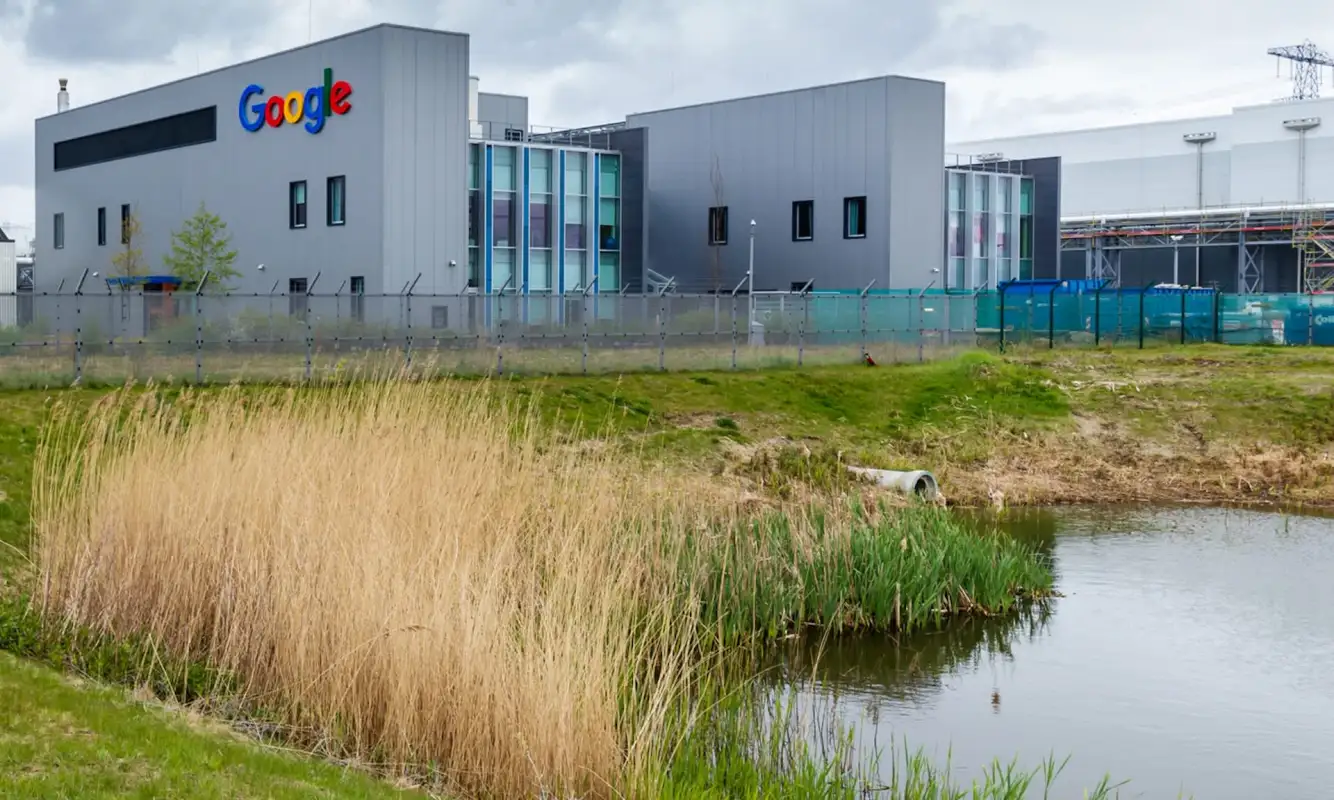
Google Invests in Infrastructure to Address Community Concerns Over Data Centers
Atlas Real Estate Advisors / September 1, 2026
If you’ve followed commercial real estate over the past two years, you’ve probably noticed one trend dominating headlines: data centers. Georgia has quickly emerged as one of the nation’s fastest-growing data center markets thanks to its reliable power grid, extensive fiber network, business-friendly climate, and strategic location in the Southeast. Artificial intelligence is fueling unprecedented demand for data centers across Georgia. For commercial real estate owners and investors, this growth creates tremendous opportunities. It also raises important questions about power capacity, water usage, infrastructure, and long-term community planning.
As billions of dollars flow into new developments, communities are asking an important question: How can we support growth while protecting local resources?
Why Some Communities Are Concerned
While data centers bring substantial capital investment and tax revenue, they have also become the subject of growing public debate. Unlike traditional industrial facilities, modern AI data centers require enormous amounts of electricity and, depending on their cooling systems, can consume significant quantities of water.
These are reasonable questions—and they’re becoming an increasingly important part of the site selection process.
Google’s Water Stewardship Announcement
Recognizing these concerns, Google recently announced a series of new water stewardship initiatives designed to reduce the environmental impact of its growing data center portfolio.
Among the commitments are the following:
- A goal of replenishing more water than the company consumes at its data center sites by 2030.
- More than $500 million in planned investments to improve water infrastructure and stewardship.
- $17 million in new watershed restoration projects across seven states.
- Continued expansion of water reuse and recycled-water systems at data center campuses.
One Georgia example already in operation is Google’s Douglas County data center campus, where the company partnered with the local water and sewer authority to cool portions of the campus using treated reclaimed wastewater instead of relying solely on potable drinking water. Google also announced a $1 million investment supporting Ducks Unlimited’s restoration of wetlands within the Flint River Wildlife Management Area in South Georgia as part of its broader water stewardship initiative. These investments reflect an important shift in the industry: major technology companies increasingly recognize that community acceptance depends on demonstrating responsible environmental stewardship.
Opportunity and Responsibility Can Coexist
The debate surrounding Georgia data centers is often framed as a choice between economic growth and environmental protection. In reality, the most successful projects recognize that both objectives are essential. Communities benefit from new jobs, expanded tax bases, and infrastructure investment. At the same time, responsible planning requires careful consideration of water resources, electrical infrastructure, and long-term sustainability. As technology companies invest billions of dollars into Georgia, those that proactively address community concerns are likely to be better positioned for long-term success.
Atlas’ Perspective
At Atlas Real Estate Advisors, we’ve seen firsthand how rapidly the market for powered industrial sites has evolved. Interest in properties capable of supporting data center development continues to grow across Georgia and the Southeast. Data centers represent one of the most significant commercial real estate opportunities of this decade, and the projects that succeed will be those that balance economic development with responsible stewardship of the communities in which they operate.
As Georgia continues to attract new technology investment, Atlas Real Estate Advisors will continue monitoring the trends, infrastructure investments, and market dynamics shaping the future of Georgia data center development and the commercial real estate opportunities that accompany it.
« Previous Next »
Experience the Atlas Real Estate Advisors difference.
Contact us today for personalized, expert advice in commercial real estate.
Let us help you navigate your real estate journey with confidence and success